A Practical Approach to Every Project
From understanding your business requirement to deployment and ongoing support, KPIS follows a structured process that keeps projects transparent, practical and focused on business value.
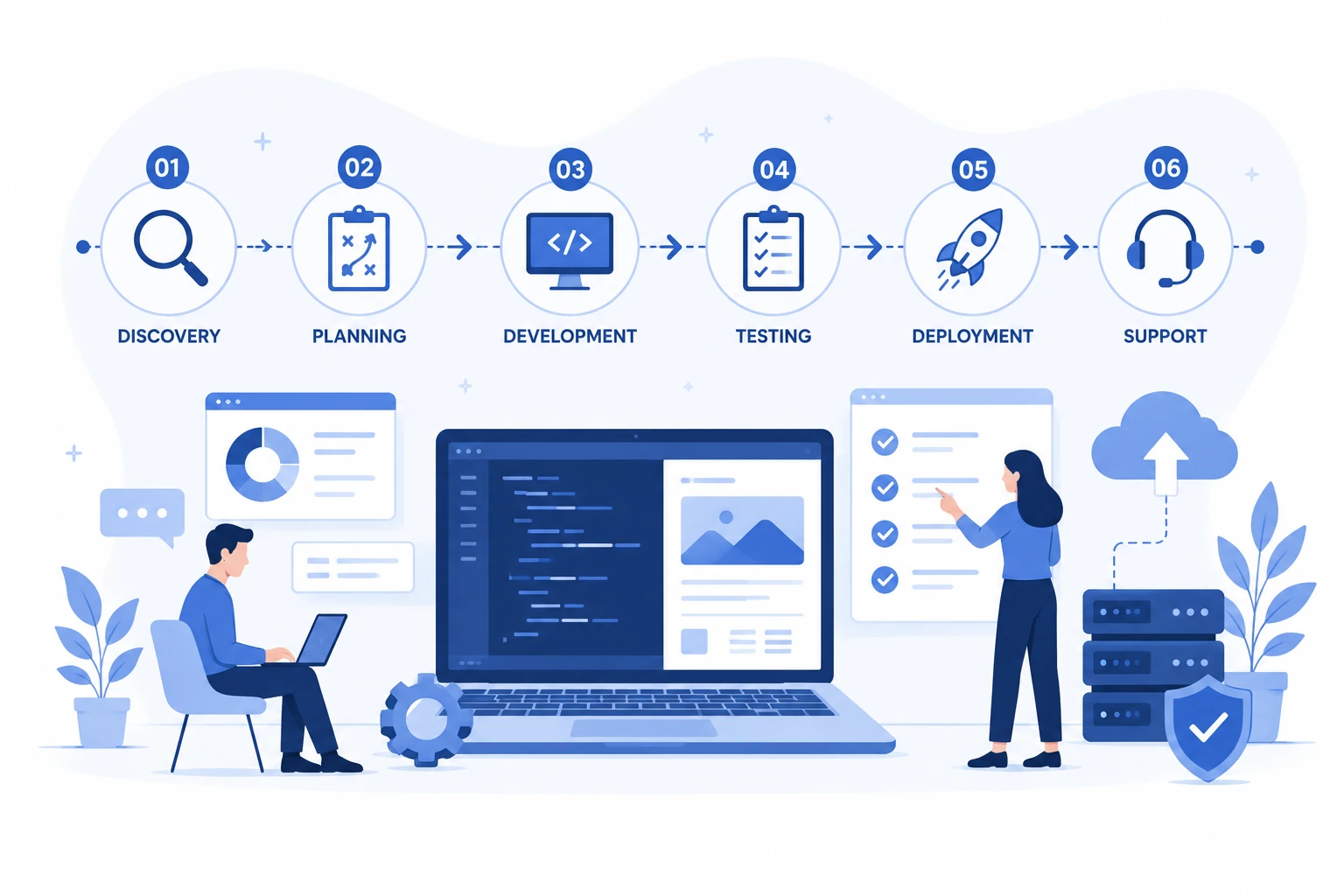
Good Software Begins With the Right Questions
We do not begin by selecting technology or writing code. We begin by understanding how your business currently works, where the challenges exist and what a successful outcome should look like.
This helps ensure that the proposed solution addresses the actual business requirement instead of adding unnecessary complexity.
Clear Communication
Regular discussions, defined expectations and transparent project updates.
Phased Delivery
Work is divided into manageable milestones so progress can be reviewed throughout the project.
Continuous Feedback
Feedback is incorporated during development rather than waiting until final delivery.
From Requirement to Reliable Software
Our process provides structure and visibility while remaining flexible enough to respond to changing business requirements.
Understand the Business Requirement
We discuss your existing process, users, challenges, dependencies and expected business outcome.
- Business requirement discussions
- Current process understanding
- User and stakeholder identification
- Initial feasibility assessment
Define Scope and Priorities
The business requirement is converted into a clear functional scope with practical priorities, assumptions and expected deliverables.
- Functional scope definition
- Workflow and data analysis
- Dependencies and risk identification
- Delivery priorities
Design the Solution and Roadmap
We define the solution structure, development phases, milestones, timeline and proposed delivery approach.
- Solution architecture
- Database and integration planning
- Project phases and milestones
- Timeline and commercial proposal
Build in Manageable Phases
Development progresses through smaller delivery stages, allowing regular reviews and early feedback.
- Incremental development
- Regular demonstrations
- Feedback-driven refinements
- Progress visibility
Validate and Launch Carefully
The completed solution is validated against agreed requirements before it is prepared for production use.
- Functional testing
- User acceptance support
- Issue resolution
- Controlled deployment
Maintain and Improve the Solution
After launch, we can continue supporting and enhancing the application as your processes and priorities evolve.
- Issue resolution
- Application maintenance
- Enhancements and new features
- Performance improvements
You Should Always Know Where the Project Stands
Clear visibility reduces uncertainty. Throughout the project, we keep communication focused on progress, decisions, dependencies and the next expected milestone.
Defined Milestones
The project is divided into understandable stages with clear delivery expectations.
Regular Reviews
Working progress is reviewed during development, rather than only at final delivery.
Early Issue Identification
Dependencies, risks and requirement gaps are raised as early as possible.
Documented Decisions
Important changes and decisions are recorded to reduce confusion later.
A Process That Adapts to the Project
The level of analysis, planning and documentation is adjusted according to the size, complexity and risk of each engagement.
New Applications
From initial concept and process analysis through development, testing and production deployment.
Application Modernization
Improve, restructure or rebuild existing applications while protecting essential business continuity.
Process Automation
Analyse repetitive workflows and replace manual activities with structured, auditable automation.
Questions About Our Project Process
Common questions about project planning, communication, changes and delivery.
Let's Discuss Your Next Project
Whether you're planning a new application, modernizing an existing system or looking to automate business processes, we'd love to hear about your project.
We'll get back to you within one business day.